News
Published: Monday, 1 Dec 2025
Selective dry cow therapy is no longer a new concept. A poll carried out during Munster Bovine’s most recent webinar “Optimising the Dry Period: Tools, Data & Decisions for SDCT” showed that 79% of the herdowners that were tuned in, were implementing SDCT on their farms. SDCT can be very successful, if implemented correctly.
Dry Period Goals:
When it comes to SCC, the goal of the dry period is to treat existing infections and prevent new infections.
Treating existing infections:
• Choose the correct antibiotic dry cow tube.
Culture and sensitivity testing of milk from problem quarters is the key here – use CMT to isolate these problem quarters.
• Choose the correct treatment protocol for individual cows.
Problem cows such as those that have had a case of mastitis or have had a persistently high SCC during the year should be given a longer dry period and a long-acting dry cow tube.
Vulnerable cows such as heifers or cows in-calf with twins should also receive a longer dry period.
• The target is to successfully cure 85% of existing infections over the dry period.
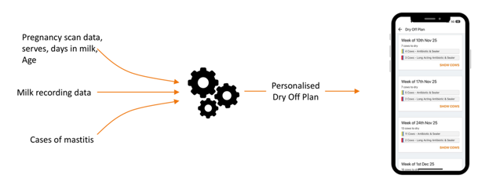
FarmOps uses milk recording data, data on clinical cases of mastitis, pregnancy scan data, serves, days in milk and age to choose the correct dry off plan for each individual cow.
Preventing new infections:
• Dry off procedure – hygiene is crucial to avoid introducing infection at dry off.
• Dry cow management and housing – adequate space and excellent hygiene is so important.
• Hygiene at calving time.
Selective Dry Cow Therapy – How To:
Herd Selection:
• Bulk tank SCC consistently under 200,000 cells/ml all year.
• At least 4 milk recordings.
• At least 1 cubicle/cow for the full dry period and excellent hygiene in the dry cow housing.
• Previous successful dry period.
• Low new infection rate.
• No evidence of Strep. agalactiae in the herd.
Figure 1: Bulk Tank SCC:

Figure 2: Recent Infection Rate:
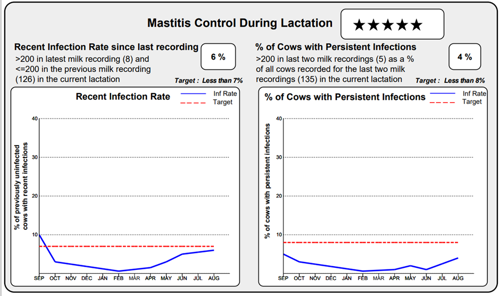
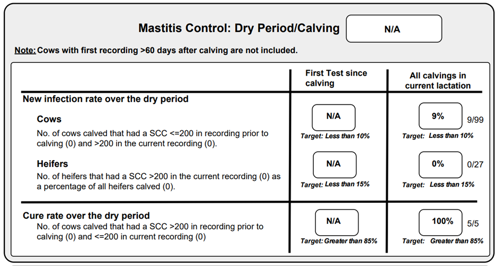
Figure 3: Previous Dry Period and Cure Rate:
Herd Selection Using Farmops:
• Herdowner can choose to implement a SDCT plan on the app.
• Herdowner answers a short questionnaire. This information is combined with milk recording data, allowing the app to assess herd suitability for SDCT.
• A useful tool when used in conjunction with your vet or advisor.
Cow Selection:
• SCC < 100,000 cells/ml all year. This threshold may vary among herds. If you are new to selective dry cow therapy, you might choose a lower threshold than this, herdowners that have previous experience of successfully implementing SDCT may choose a higher threshold.
• No clinical case of mastitis all year.
• Last milk recording or Genocells close to dry off.
• It is good practice to CMT those cows that are to receive sealer only at dry off to ensure their SCC is still low.
Early Milk Recording Next Spring:
It is crucial to monitor the success of your dry period. To do this, cows must be milk recorded within 60 days of calving – see Figure 3 above.
Persistently Infected Cows:
Cows that are persistently infected for 2 consecutive lactations are extremely unlikely to cure and if they are retained in the herd they act as a source of infection in the milking parlour – see figure 4 for an example.
Persistently infected 4th plus lactation animals are also difficult to cure.
If you are retaining persistently infected cows in the herd, it is important to treat them appropriately by giving them a longer dry period and a long-acting dry cow tube as previously discussed.
Figure 4:

Take-Home Message:
Selective dry cow therapy can be very successful, if implemented correctly. Before embarking on SDCT it is important to have an in-depth discussion with your vet or advisor.
For more information, scan the QR code to watch Munster Bovine’s webinar “Optimising the Dry Period: Tools, Data & Decisions for SDCT”.

Related Articles
Published: 25 Feb 2026
Fertility – A Key Driver of Milk Production

Published: 09 Nov 2025
NEW BASE REVEALS A DECADE OF GENETIC PROGRESS - Milk Matters November 2025
Published: 20 Oct 2025
Milk Matters Oct. 25 - Munster Bovine's Herd Health Programme
Published: 07 Aug 2025
Milk Recording - Milk Matters July 2025