News
Published: Wednesday, 18 Jun 2025
Focusing on Digital Dermatitis
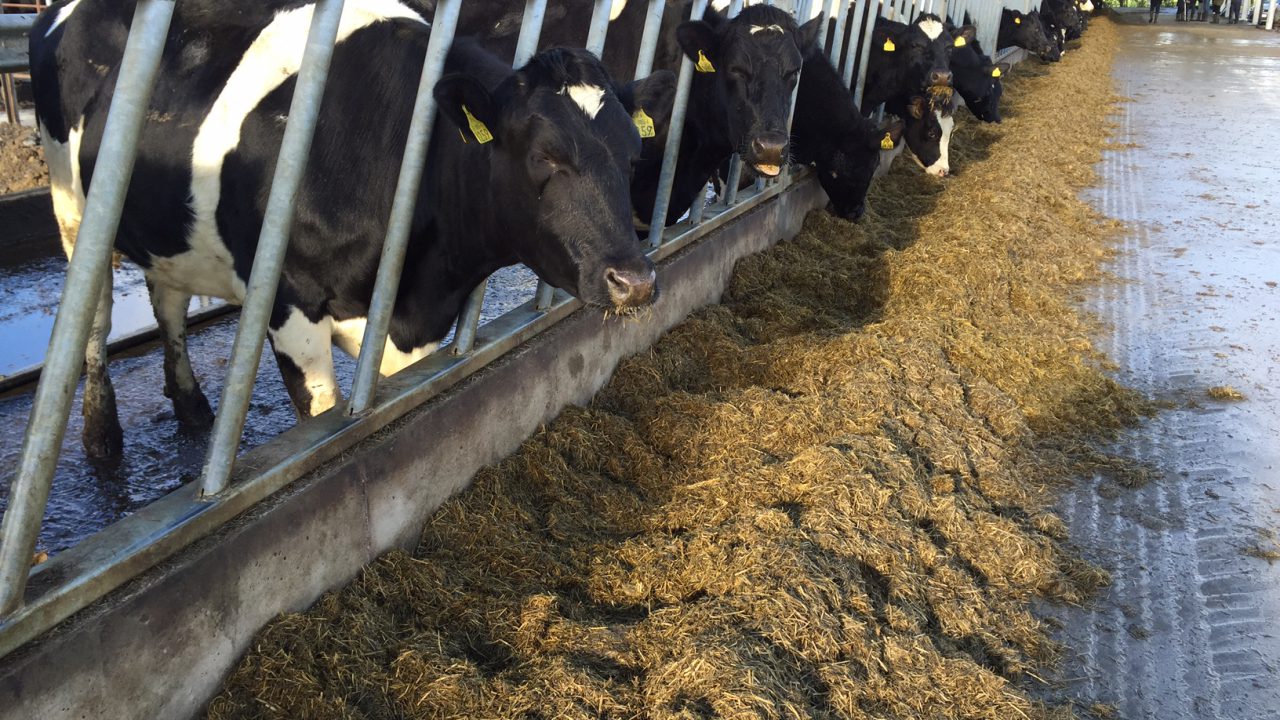
Lameness poses a significant economic and welfare challenge for Irish farmers. Economically it can result in reduced productivity arising from reduced milk yield and reduced reproductive performance. The costs associated with treating clinical cases and culling affected animals also need to be considered.
Causes of lameness can be either infectious, such as footrot or digital dermatitis, or non-infectious, such as white line disease, solar ulcers, and bruising.
There are numerous risk factors for lameness:
Housing:
- · Cubicle number and design – if too few cubicles or poor cubicle design, lying times will be reduced.
- · Inadequate feeding area – may lead to competition for feed.
- · Rough or slippery walking surfaces.
- · Underfoot conditions – cows that are walking or standing in slurry are much more prone to lameness.
Grazing:
- · Long walks or rushing cows
- · Roadway surface and design
- · Yard and parlour design – aim for good cow flow
- · Wet underfoot conditions – especially watch areas where cows gather eg water troughs, inside gaps.
As part of our Munster Herd Health program, we have now included a test for Digital Dermatitis (Mortellaro).
Digital Dermatitis is a painful, infectious disease of the hoof that can quietly spread through herds, causing significant lameness which undermines herd performance and profitability.
Digital Dermatitis is caused by a Treponeme bacterium BUT, this bacterium needs a breakdown in the skin surface in order to establish an infection. This is where the condition of the feet and the underfoot conditions become crucially important, as this bacterium thrives in dirty, wet conditions.
Digital dermatitis goes through different stages of infection – active lesions are red, ulcerated and painful. These lesions can vary in size. Healing lesions are covered with a dark scab and even if these lesions appear to heal, they can become chronic lesions where the bacteria become encysted in hair follicles and lesions may recur in these animals at a later date. These animals with chronic lesions are the main source of infection in the herd. Due to this infection pattern, it is very difficult to eradicate Digital Dermatitis once it becomes established in the herd. It can, however, be effectively controlled.
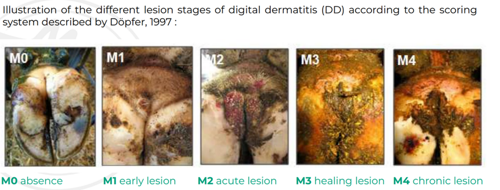
The first step in managing Digital Dermatitis is the prompt identification and treatment of cases. Topical treatments work quite well here – speak to your vet about treatment protocols.
Once Digital Dermatitis has been identified in the herd and all clinical cases have been treated, the next step is halting the spread of disease. This is where foot bathing can play an effective role.
There is much debate about the most effective reagent to use in footbaths but truthfully, what is much more important is the design and maintenance of the footbath.
Footbaths should be 3.5-4m in length. This is to ensure that each foot will be submerged in solution at least twice. If the footbath is any longer cows will start to dung in it and contamination of the footbath in this way will deactivate the reagent.
Footbaths should be 0.8-0.95m wide and 12-15cm deep. There needs to be at least 10cm of solution in the footbath at all times as we want the solution to come above the coronary band (where hoof horn meets the skin).
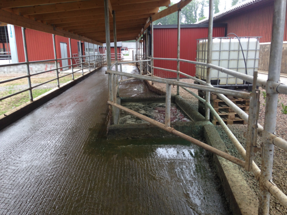
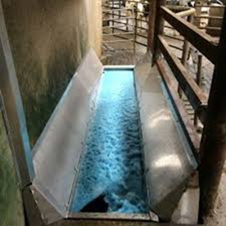
Other important considerations are:
- · Location of the footbath. Ideally, we want to exploit normal cow flow.
- · High volume water supply close by – the easier the footbath is to fill, the more likely you are to use it.
- · Footbaths should be flat bottomed, and the base of the footbath should be level with the floor, not dug down into it.
An extra footbath filled with water before the chemical footbath may seem like a good idea, but this will increase dunging in the chemical footbath. The best option is to wash the feet with a high-volume hose in the parlour prior to cows walking through the footbath. When you do this initially, it may cause cows to dung excessively in the parlour but they will get used to it.
Whatever reagent you choose, it needs to be made up to the correct concentration (according to the instructions) and replenished as needed. Each litre of solution will allow one cow passage so if your footbath holds 200L of solution, it needs to be changed after 200 cow passages. When changing the solution ensure that the footbath is drained completely and rinse with water before replenishing the footbath solution.
If problems are severe it is recommended to footbath 2-3 times per week. Once you have the issue under control you may be tempted to stop footbathing altogether but as stated previously, Digital Dermatitis cases can recur. To prevent this recurrence, it is important to continue foothbathing. Once a week should suffice in this scenario.
If your herd is free from Digital Dermatitis, these are some tips to keep it that way:
- · Maintain good biosecurity
- · Avoid buying animals
- · Hygiene – ensure good underfoot conditions as best you can.
- · Monitor the herd for signs of lameness and treat cases promptly.
As part of our Herd Health program, bulk milk samples will be tested for Digital Dermatitis twice yearly.. Antibody levels to DD increase dramatically in the face of active lesions. If no new DD case occurs, it takes about 6 months for antibodies to return to a low level. As such, this testing schedule is an effective tool to monitor for the presence of the infection and the effectiveness of any control measures being implemented in the herd.
Related Articles
Published: 25 Feb 2026
Fertility – A Key Driver of Milk Production
Published: 26 Jan 2026
Munster Bovine the latest to come on board as a patron of Agri Aware

Published: 05 Jan 2026
Dosing Do's and Don’ts, Winter Vaccination and Managing Cows in the Dry Period
Published: 01 Dec 2025
Selective Dry Cow Therapy - Milk Matters December 2025